
NDIS supports
High intensity and complex care
PEG feeding, catheter care, complex bowel and wound care, with workers trained on your plan and signed off by a registered nurse. Across Logan, Ipswich, Brisbane and Redland Bay.
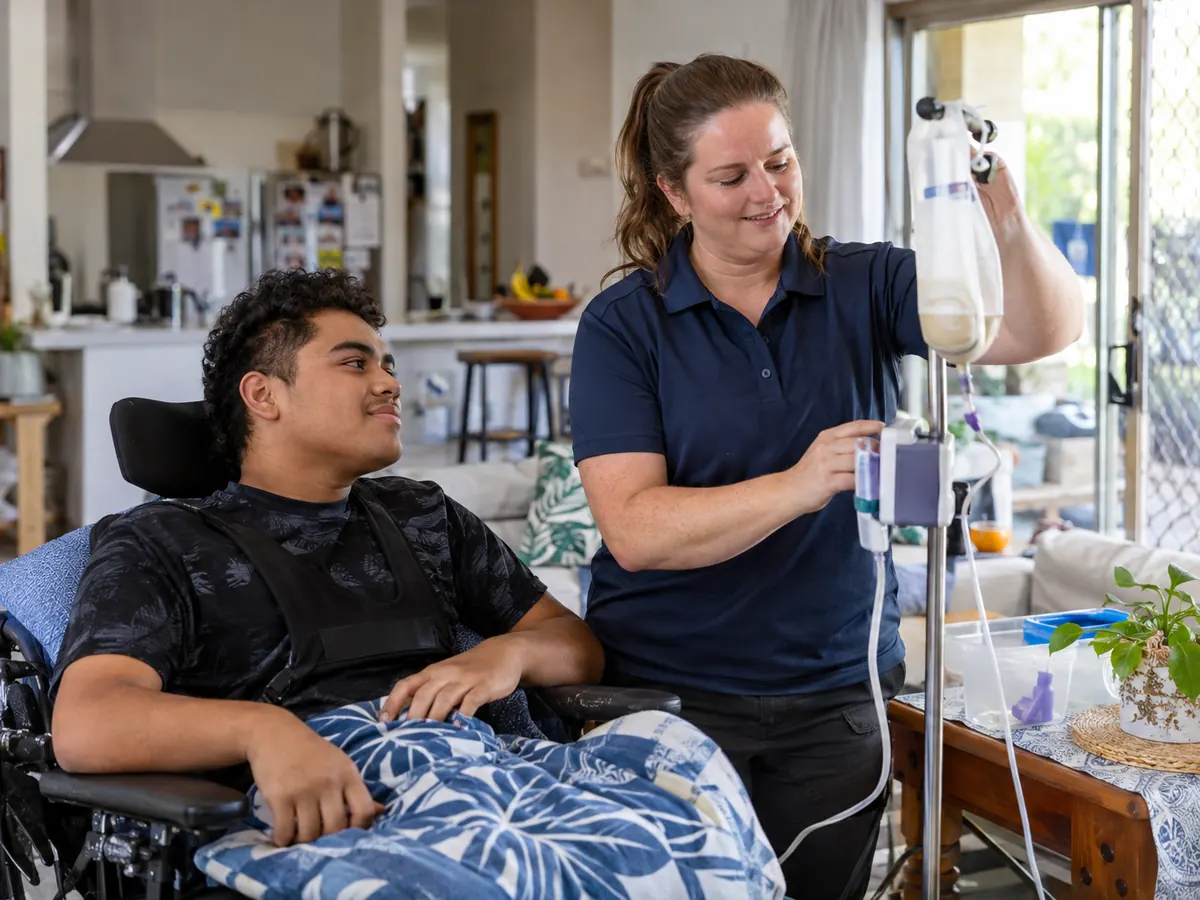
Trailblazer Community Care is registered with the NDIS Commission for high intensity daily personal activities. We support participants in Logan, Ipswich, Brisbane and Redland Bay with PEG and enteral feeding, urinary catheters, complex bowel care, complex wound care and subcutaneous injections. Every worker is trained on your own plan and checked by our clinical lead, a registered nurse, before they do the task with you.
We also look after complex needs that sit outside the official list, such as stoma care and hoist transfers, and we support people living with complex mental health conditions as part of their everyday supports.
Which high intensity supports we provide
The NDIS Commission lists eight supports as high intensity in its supplementary module for high intensity daily personal activities. These are the ones we provide:
- PEG and other enteral feeding, including tube care and feeds through a pump or by bolus
- Urinary catheter care, indwelling or suprapubic
- Complex bowel care that follows a program set by a health practitioner
- Complex wound management for wounds that need planned, specialised care
- Subcutaneous injections ordered by your doctor
We don't currently provide severe dysphagia management, tracheostomy management or ventilator management, the other three supports on the Commission's list. If you need any of them, talk to us and we'll help you find a provider who does.
If you want a plain-English walk through all eight, and the questions worth asking any provider, read our guide to NDIS high intensity supports explained.
Complex care that isn't on the official list
Some care is demanding and carries real risk without being one of the eight. Two come up often.
Stoma care. Changing and emptying bags, checking the skin around the stoma, and noticing when something looks wrong. It needs training, but it isn't a high intensity support under the Commission's rules.
Hoist transfers. Moving someone safely between bed, chair and shower with a hoist. Many of the people we support rely on this several times a day. It needs a manual handling plan and workers who know your hoist and your sling, and it sits with personal care rather than the high intensity group.
We treat both the same way as the official eight. Workers are trained on your equipment and checked before they work alone with you, and your plan says what to do if something changes. You can read more about everyday personal care on our assistance with self-care page.
How training and sign-off work
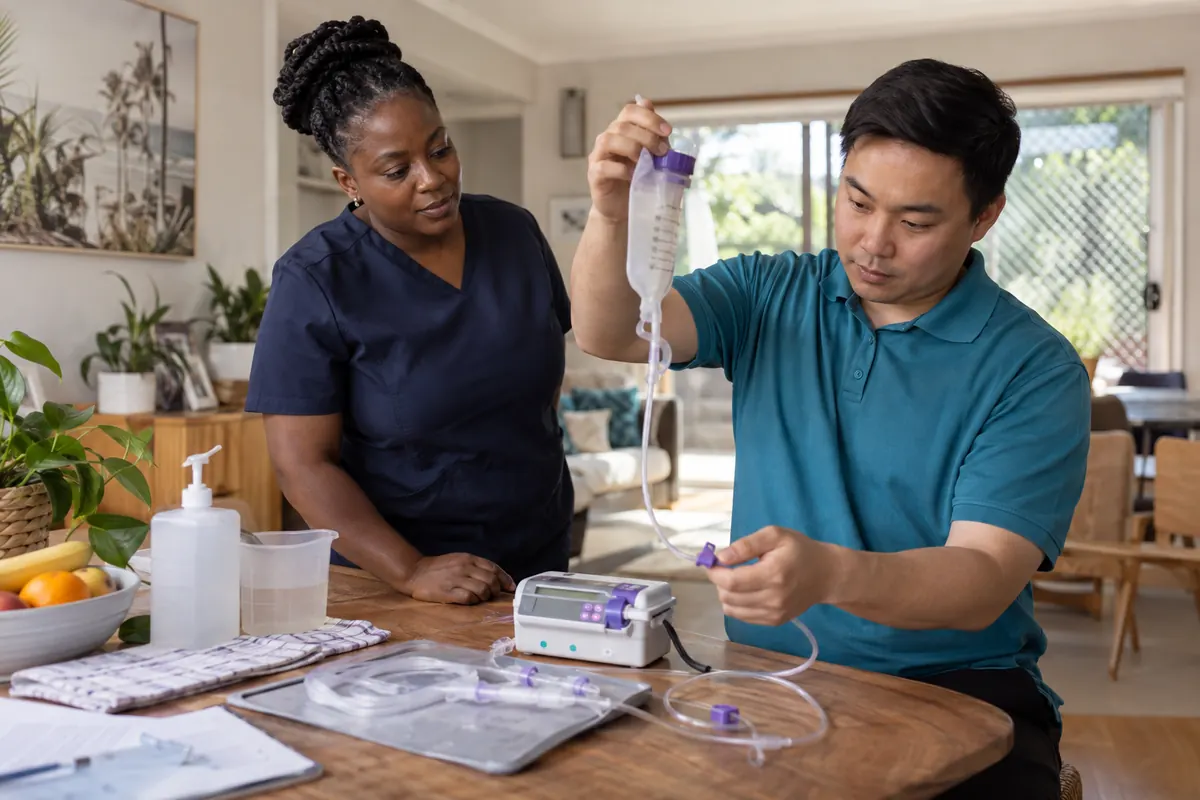
The NDIS Commission says these supports don't have to be delivered by a nurse. Trained support workers can do them, as long as their training is specific to the person and a qualified health practitioner is involved. What matters is who does the training and who decides a worker is ready.
At Trailblazer that's Exavier Rikonda, our founder and clinical lead. Exavier is a registered nurse with 14 years of nursing experience.
Assessment with you
We go through your needs, your equipment and any orders from your doctor, dietitian or speech pathologist. You and the people you choose are part of that conversation.
A written plan
Your plan sets out how the support is done, what's normal for you, the warning signs, and who to call when something isn't right.
Training on your plan
Workers are trained on your tube, your catheter or your bowel program, rather than a generic version.
Competency sign-off
Our clinical lead watches each worker do the task before signing them off to do it alone with you.
Review
The plan is reviewed when your health changes, after a hospital stay, or when a worker or treating professional raises a concern.
When your regular worker is away, the replacement has to be trained and signed off on your plan too. If they haven't been, they don't do the task. That can make rostering harder, and we think it's worth it.
If you already receive support from us, you have an after-hours on-call number. It reaches a registered nurse or a line manager, so a worker or family member with a clinical concern always has someone to call. In an emergency, call 000.
Psychosocial and complex mental health support
Some of the people we support live with a psychosocial disability, such as schizophrenia or bipolar disorder, alongside physical or clinical needs. We don't run psychosocial support as a separate service. It's part of how we deliver your other supports, whether you live in one of our SIL homes or we visit you for personal care and outings.
In practice that looks like:
- the same small group of workers where we can manage it, so you aren't explaining yourself to strangers
- a plan that records what a good day and a hard day look like for you, and what helps
- early warning signs you have told us about, and what you want us to do if we see them
- prompting with medication where that's part of your support, and noticing side effects
- with your consent, keeping your GP, psychiatrist or mental health team informed
- keeping an eye on physical health, which is easy to overlook when mental health takes up most of the attention
Having a nurse lead the clinical side helps here. A change in mood can come from a new medication or from an infection nobody has picked up yet, and our clinical lead looks at the whole picture.
We are not a crisis service. If you or someone you support is in danger, call 000. For crisis support any time, call Lifeline on 13 11 14.
The NDIS sets rules about restrictive practices, meaning anything that limits a person's freedom of movement or rights.
Where a regulated restrictive practice is part of someone's behaviour support plan, we only use it once it has been authorised under Queensland law, and we report its use to the NDIS Quality and Safeguards Commission. Our quality and safeguarding page explains more.
Talk to a registered nurse-led team
Call 1300 822 333 or send a referral. We reply to every enquiry within 12 to 24 hours.
Asking a question does not commit you to anything.
Funding and who decides
High intensity supports are paid from your NDIS plan. The NDIA decides what goes in that plan, usually based on evidence from your treating health professionals. The NDIS explains this under disability-related health supports, which can include a support worker trained to give feeds through your PEG and funding for a nurse to train the people who support you.
No provider can approve NDIS funding. If a provider tells you they can get your funding approved, be careful. We can tell you what kind of evidence tends to help, and we work with your support coordinator if you have one. We don't provide support coordination or plan management ourselves.
Our standards
High intensity providers are audited against an extra module of the NDIS Practice Standards. How we manage clinical risk and incidents is set out on our quality and safeguarding page. When a task needs a nurse rather than a trained support worker, such as a catheter change, our NDIS community nursing service covers it.
Questions about high intensity and complex care
What counts as a high intensity support under the NDIS?
The NDIS Commission lists eight: complex bowel care, enteral feeding, severe dysphagia management, tracheostomy management, urinary catheter management, ventilator management, subcutaneous injections and complex wound management. A provider needs registration for this group, and workers need training specific to each participant. Other demanding care, like hoist transfers, sits outside that list.
Can a support worker do PEG feeding?
Yes, if they have been trained on your PEG and your feeding plan and assessed as competent. The NDIS Commission does not require a nurse for PEG feeding. At Trailblazer our clinical lead, a registered nurse, signs each worker off before they feed you on their own.
Is hoist transferring a high intensity support?
No. It isn't one of the NDIS Commission's eight high intensity supports. It still needs a manual handling plan and workers trained on your hoist and sling. We provide hoist transfers as part of personal care, with the same training and sign-off approach.
Do you provide psychosocial support?
Yes, as part of your other supports rather than a separate program. Workers follow a plan that covers what helps on hard days and the early warning signs you've shared. With your consent we stay in touch with your treating team. We're not a crisis service, so call 000 in an emergency.
Do you support people with a tracheostomy or ventilator?
Please call us on 1300 822 333 to talk it through before referring. We only provide high intensity supports we are registered for and have trained workers on, and we'll tell you straight away if we're not the right fit for tracheostomy or ventilator care.
How quickly can high intensity support start?
It depends on your needs and on getting workers trained and signed off on your plan, which can't be rushed. We reply to every enquiry within 12 to 24 hours and can then talk about realistic start dates.
- High intensity supports explainedThe eight supports the NDIS Commission calls high intensity, how workers are trained for them, and what to ask a provider.
- NDIS community nursingClinical nursing at home for NDIS participants: wound care, continence, diabetes, injections, catheter and stoma care.
- Personal careShowering, dressing and daily routines at home, from consistent workers you get to know, with registered nurse oversight.
Talk to a registered nurse-led team
Call 1300 822 333 or send a referral. We reply to every enquiry within 12 to 24 hours.
Asking a question does not commit you to anything.